

Meta Compute signals a gigawatt AI buildout but is it an internal engine or a future hyperscale rival?
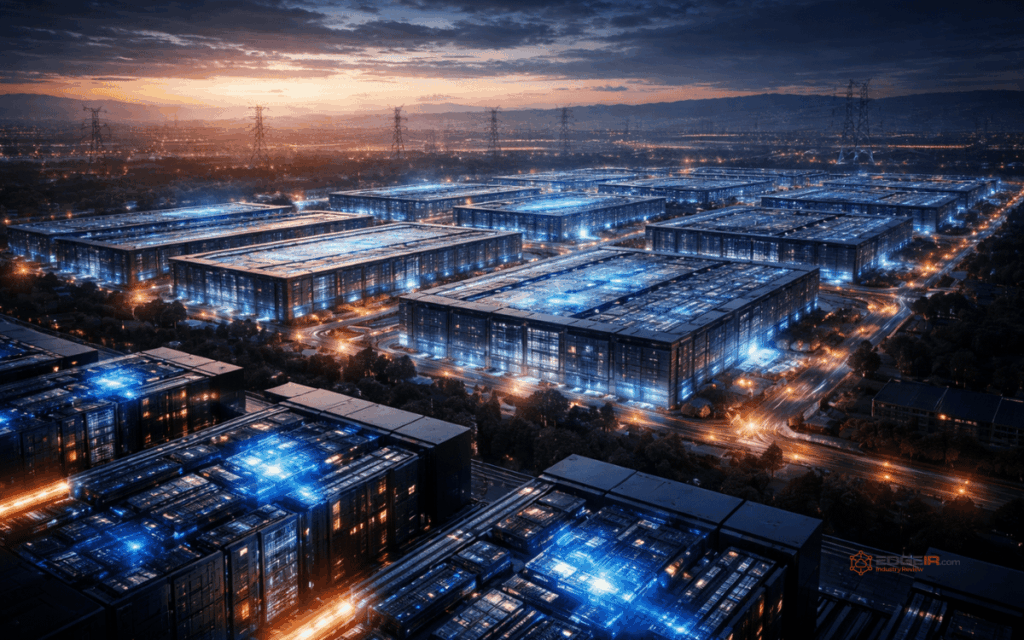
Summary: Meta launched Meta Compute, what is being described as a ‘top-level initiative’ that will oversee the rapid building of gigawatt-level data center infrastructure on a global basis. The leadership in charge of this initiative will be Santosh Janardhan and Daniel Gross. Janardhan leads technical architecture and the software stack, along with silicon, and building and operating Meta’s global data center footprint and network infrastructure. Janardhan’s title is head of global infrastructure, co-head of engineering. Gross will lead a new group that will be focused on long-term capacity planning and strategy, supplier/vendor partnerships, and analysis. A third person, Dina Powell McCormick, Meta’s new president and vice chairman, will work on partnering with governments and sovereigns to build, invest, finance and stand up Meta’s global infrastructure. Details shared were sparse, but Meta confirmed it plans to build tens of gigawatts worth of compute capacity in this decade, with a long-term goal of building hundreds of gigawatts. It did not specify whether this was largely a data center initiative to support internal AI development and other infrastructure needs, or possibly a compute infrastructure platform that would be deployed for external users. The larger goal is to ‘deliver personal superintelligence to billions of people around the world’, which is obviously broad and a purposefully generic comment. It is more notable how Meta states that how it invests, engineers and partners to build infrastructure will become a ‘strategic advantage’. But strategic advantage for what? And therein is the question. Is Meta Compute strategic advantage for Meta’s AI ambitions, tied in with its social media business? Or is it the first step into getting into the cloud and AI compute infrastructure business? The scale and scope of what is planned is clear, but what has ramifications for the Internet infrastructure market is to what extent this is for internal purposes or external productization.
Building more data centers and in more places: The answers to all these questions are not yet clear, but that will not stop us from speculating, as this development could potentially have significant ramifications for the sector. Clearly, the initiative is going to spend a lot of its time focused on Meta’s internal infrastructure needs. From the development of the Llama AI model to Meta’s social media properties and other consumer
products, there is going to be an endless need for data center infrastructure. In that sense, this move is very much about building out the organization and capabilities to make that happen in a gigawatt world with increased resource constraints. An interesting wrinkle is the mention of sovereigns and governments. Meta, unlike hyperscale clouds, has a relatively limited geographic footprint. It builds big in fewer places, serving multiple geographies and national markets, whereas the likes of AWS and Microsoft Azure have localized infrastructure in most major markets. It makes sense that Meta is set to build in many more jurisdictions as its social platforms, and the underlying AI technology, is going to be increasingly subject to oversight and regulations from government entities. We should expect Meta to start building in more countries and markets in similar fashion to hyperscale cloud platforms.
Meta Compute could become a hyperscale AI or cloud infrastructure platform: The other possibility worth thinking about is will Meta Compute eventually become an external computing infrastructure platform? Will it become the next hyperscale public cloud platform? The way Meta is approaching energy procurement, building at massive scale, investing CapEx and looking to external sources for capital, shows that it could easily make this transition. It may not even be thinking about the cloud market right now, but it is something that could make sense similar to how Amazon looked at the infrastructure supporting its e-commerce platform and decided to turn it into a business, while benefitting from all the scale benefits. If things continue to go as they have, it is very possible Meta could in the near future have extremely large volumes of capacity that it could turn into a cloud infrastructure platform. It would be optimized for AI and could maybe focus on serving large models like an OpenAI or Anthropic. In short, Meta Compute could become the AI hyperscale cloud.
Integrated and verticalized means hyperscale: The other notable wrinkle around this development is the fact that Meta has actively brought together leadership and teams that span the spectrum from data centers, network, software, silicon, suppliers, technical design and architecture, and planning and procurement. The various pieces that make up infrastructure have to work in concert to scale efficiently. But just as importantly, Meta looks to be thinking in terms of an integrated infrastructure and software stack for AI. We are already starting to see this take shape at NVIDIA as well. Hyperscale infrastructure, when it comes to AI, is going to be less about raw infrastructure that is technology-neutral that general-purpose workloads can run on (ie. the traditional cloud world). Instead, the leading platforms in the AI race are building fully integrated and verticalized AI infrastructure that can only mean they will eventually have to run at critical mass, and work in native environments, ultimately widening the universe of hyperscale compute infrastructure platforms and competing head-on.
About the authors:
Phil Shih is Managing Director and Founder of Structure Research, an independent research firm focused on the cloud, edge, AI and data center infrastructure service provider markets on a global basis.
Jabez Tan is Head of Research of Structure Research, analyzing the interplay between Data Centers, Hyperscale Cloud and Generative AI.
Edge Infrastructure
Where AI inference will land: The enterprise IT equation
Article Topics
AI infrastructure | AI/ML | analyst insight | cloud infrastructure | data center | hyperscale | Meta

Comments